

The Great Escape: What Happens When 'Just One More Dog' Becomes Fifty
We’ve all been there. You’re scrolling through social media, you see a pair of puppy dog eyes that could melt a glacier, and you think, "What’s one more? My couch has three cushions; I’ve only got two dogs. The math practically demands I adopt this one."
At Cactus Ranch Rescue, we advocate for following your heart, mostly because your heart usually has better taste than your brain, but there is a very real, very messy line where "helping" turns into a full-blown episode of a reality show nobody volunteered to star in. In the rescue world, we call these hoarding cases. To the dogs involved, we call it "The Big House." And to the staff here at the Ranch, we call it "The Tuesday we needed five extra pots of coffee and a fleet of minivans."
Hoarding is a heavy topic, but if we don't laugh a little between the bleach-scrubbing sessions, we’d probably just vibrate into another dimension. So, let’s talk about what happens when the "just one more" mentality hits fifty, and how these pups make their daring escape into a life involving actual treats, personal space, and, dare we say, a clean carpet.
The Math of a Hoarding Case: A Lesson in Geometry
Animal hoarding usually doesn't start with someone deciding to be a villain. It’s not like a Disney movie where an evil mastermind wants to make a coat out of Dalmatians. In fact, research shows it often stems from a place of deep, albeit misguided, compassion. It’s usually someone who can’t say no, combined with a touch of obsessive-compulsive tendencies and a dash of "I’m the only one who can save them" syndrome.
But here’s the thing about dogs: they are not inanimate objects. Unlike a collection of vintage stamps or those Beanie Babies your aunt is still holding onto for her retirement fund, dogs require calories, medical care, and enough square footage to not be constantly standing on each other's heads.
When we get a call about a hoarding situation involving fifty dogs, the math is terrifying. That’s 200 paws to wipe, 50 sets of ears to scratch, and a food bill that looks like the national debt of a small island country. In these environments, the dogs aren’t being "cared for" in the traditional sense; they are surviving a permanent, high-stress slumber party that never ends and has no snacks.

The Breakout: Logistics, Lint Rollers, and Lessons
When Cactus Ranch Rescue steps in to help with a large-scale intake, it’s a logistical ballet, if the ballet was performed by people in scrubs carrying crates while being barked at by a chorus of confused canines.
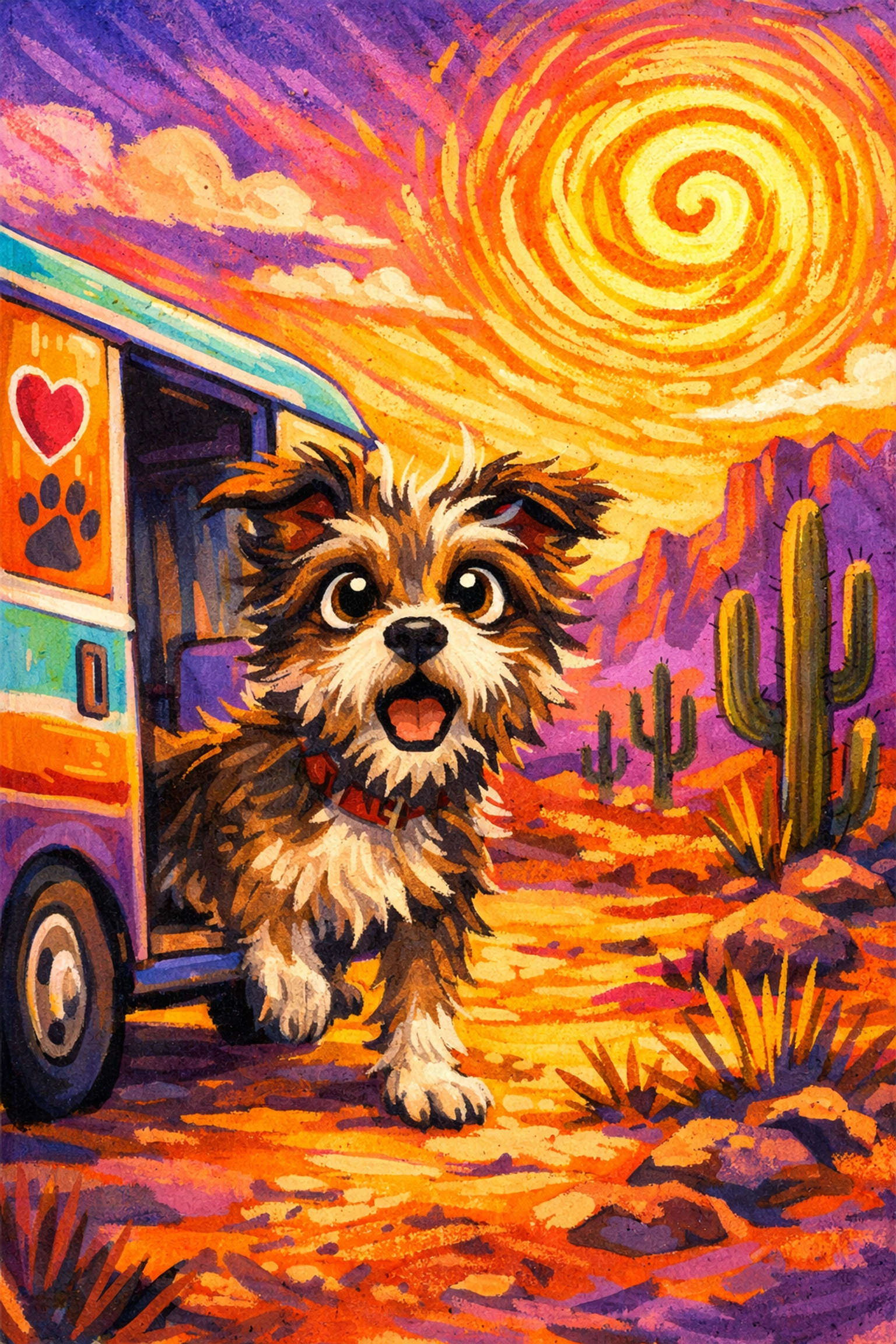
Our first priority is getting everyone out safely. These dogs have often spent their entire lives indoors, frequently in cramped conditions. For many of them, the first time they feel the Arizona sun on their snouts is the day we put them in a transport van. This is where the transformation begins, and it starts with a lot of wide-eyed staring.
If you’ve ever seen a dog realize that the world is bigger than a living room, it’s a mix of "Oh my god, what is that glowing orb in the sky?" and "Is that grass? Why is it poking me?" We spend those first few hours just letting them breathe. We get them to our facility, we start the medical evaluations, and we begin the long process of explaining that, no, they don’t have to fight a Chihuahua for a kibble anymore.
If you want to see how we manage our intake and ongoing care, check out our services page to see the kind of work that goes into preparing a rescue for their new life.
Relearning How to Dog: The "Normal Life" Boot Camp
Imagine you’ve lived your whole life in a crowded elevator. Then, suddenly, someone hands you a King-sized bed, a Netflix subscription, and a bag of jerky. You’d be a little weirded out, right?
Hoarding survivors often come with a set of "quirks." Research points out that these dogs frequently exhibit repetitive behaviors: pacing, spinning in circles, or obsessively licking things. This isn't because they’re "broken"; it’s because their brains developed coping mechanisms to handle extreme stress.
At Cactus Ranch Rescue, our job is to be the "Dog Whisperers" of the weird. We help them adjust to the terrifying realities of:
The Vacuum Cleaner: The loud, floor-eating monster that is actually harmless.
The Concept of "Mine": Realizing that a toy belongs to them and won't be snatched by thirty other dogs.
Human Hands: Learning that hands are for belly rubs and ear scritches, not just for moving you out of the way.
We spend weeks, sometimes months, working on socialization. We use positive reinforcement to build their confidence because their concentration and memory have often been fried by chronic stress. It’s slow work, but watching a dog go from "cowering in the corner" to "demanding a treat with the audacity of a Victorian orphan" is why we do what we do.
From the Pack to the Palace: Finding Forever Homes
The ultimate goal of any "Great Escape" is the forever home. But moving a dog from a hoarding situation into a quiet suburban house is like moving a New York City cab driver to a quiet monastery in Tibet. It’s a culture shock.
We look for special kinds of adopters for our hoarding survivors. We need people with patience, people who don't mind a dog who might spend the first three days living behind the sofa, and people who understand that "house training" is a journey, not a destination. These dogs often have "attachment issues," meaning they will follow you into the bathroom, the kitchen, and probably try to follow you into your dreams. They finally have a person, and they aren't letting go.
If you’re feeling brave and have a surplus of love (and maybe some enzymatic cleaner, just in case), you can see who is looking for a home on our blog page where we feature our current residents.

How You Can Be Part of the Escape Team
Running a rescue isn't just about playing with puppies all day (though we do try to squeeze that in). Handling a hoarding case is an enormous financial and emotional drain. When fifty dogs show up at once, our supply of kibble vanishes faster than a plate of cookies at a toddler's birthday party.
If you can’t adopt, you can still be a hero in this story. There are several ways to support the "Great Escape":
Donate: Every dollar goes toward medical care, vaccinations, and the high-quality food these pups need to regain their health. You can contribute directly at our donation page.
Volunteer: We always need extra hands for socializing, cleaning, and walking. Come see us in person or check out our event list to see where we'll be next.
Spread the Word: Sometimes the best thing you can do is tell a friend. Maybe your neighbor has been looking for a quiet senior dog who just wants to nap on a rug.

Toward a Better, Less-Crowded Future
The reality of animal hoarding is heartbreaking, but the recovery is where the magic happens. We’ve seen dogs who didn't know how to walk on a leash become agility champions. We’ve seen terrified Chihuahuas who wouldn't let a human touch them become the world's most aggressive snugglers.
At Cactus Ranch Rescue, we believe every dog deserves to be an individual, not just a number in a pack. We’re committed to the long-term rehabilitation of these survivors, ensuring that their "Great Escape" leads them to a life of safety, dignity, and way too many treats.
If you want to learn more about our mission or see how we’re working to change the lives of animals in our community, visit our about page. Together, we can make sure that "just one more dog" is always a choice made with love, space, and a very large bag of kibble.
And if you’ve already helped us out, we see you, and we appreciate you. You can find our donation thank you page here, but honestly, the real thanks is in the wagging tails of fifty dogs who finally know what it means to be home.

Comments